Sewer Line Repair in the USA
Sewer lines carry waste from every fixture to the main connection. Our technicians trace the line from the building cleanout outward, noting where pitch changes or where older sections join newer pipe. When flow stops or backs up into lower drains, the first step is confirming whether the blockage sits inside the house or beyond the foundation wall.
Once the line is isolated, crews measure distance to the obstruction and check for standing water levels at each cleanout. This data determines if the problem needs only clearing or if the pipe itself requires replacement sections. Every assessment starts at the exterior cleanout to avoid unnecessary interior work. Ric's Plumbing plumbers trace water flow in sewer line repair projects and post related information on the homepage across the USA.
Observable Indicators of Line Trouble
- Multiple fixtures drain slowly at the same time.
- Gurgling sounds occur in lower floor drains during use.
- Sewage odor rises near floor drains or cleanouts.
- Soft spots appear in yard soil above the line path.
- Toilets require extra flushes or show rising water.
Typical Causes Found on Site
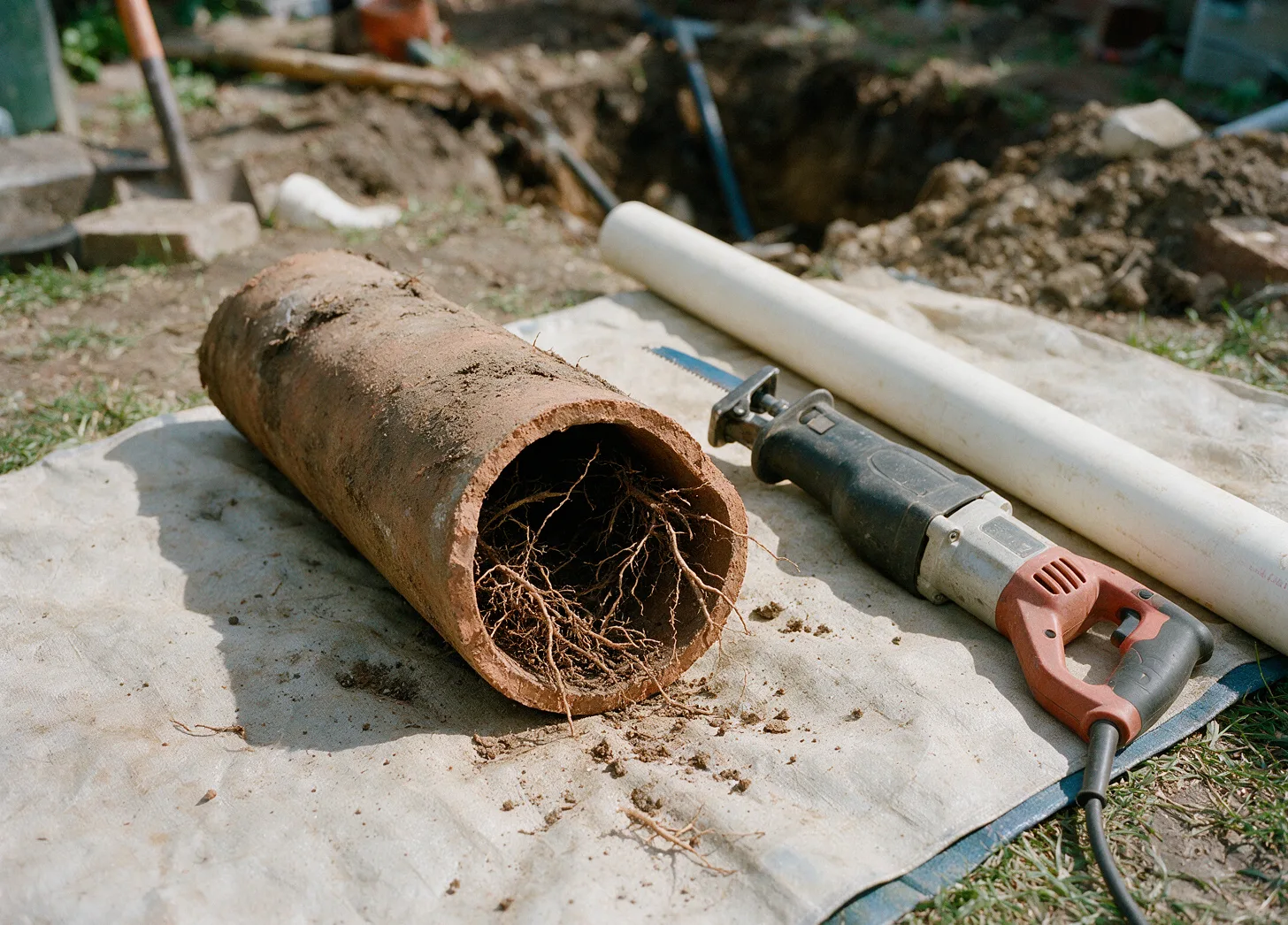
Tree roots enter through pipe joints or small cracks and expand inside the line until they trap solids. Cast iron and clay pipes develop scale that narrows the bore over decades, while ground movement can separate bell-and-spigot connections and create offsets that catch paper and grease.
Heavy grease poured down kitchen drains cools and hardens on the pipe wall, building ridges that slow flow until only a small channel remains. Shifting soil around newer PVC sections sometimes cracks the pipe at the connection to older materials, allowing sediment to enter and settle.
Inspection Steps Our Technicians Follow
Technicians first locate every cleanout along the run and remove the cap to check water level and odor. A camera is then fed from the exterior cleanout toward the street or septic tank while distance is recorded at each notable change in pipe condition or direction.
Flow is observed during the camera pass to see whether water moves steadily or pools behind roots or offsets. Technicians also measure the distance from the cleanout to the main connection so they know exactly how much pipe may need work if replacement becomes necessary.
Repair and Replacement Options
Spot repairs replace a short damaged section by cutting out the bad pipe and installing a new PVC or ABS coupling with rubber gaskets. For longer runs with repeated root problems, pipe bursting pulls new HDPE through the old line while fracturing the existing pipe outward.
Cured-in-place lining inserts a resin-saturated felt tube that hardens against the interior wall, sealing cracks without excavation. Where the line has collapsed or holds constant offsets, full replacement with new PVC SDR-35 pipe laid at proper pitch is performed from cleanout to main connection.
Actions Before Arrival
Homeowners should stop running water through any affected fixtures and note which drains still work. If an exterior cleanout cap is accessible and not already removed, it can be taken off to allow backed-up water to escape outside rather than into the building.
Avoid using chemical drain cleaners because they can damage camera equipment and make later video inspection harder to interpret. Keep pets and children away from any wet areas near floor drains until the line is cleared or repaired.
Sewer Line Repair questions
How do roots get into a sewer line?
Roots follow moisture and enter through joints or hairline cracks in older clay or cast iron pipe. Once inside they grow rapidly because of the constant nutrient supply from waste water. Our camera locates every entry point so repairs target only the affected sections.
What pipe materials are used for replacements?
New sections are typically SDR-35 PVC or schedule 40 ABS because both resist root intrusion and maintain smooth interiors. Where pipe bursting is chosen, high-density polyethylene is pulled through to create a continuous, joint-free run from cleanout to the main.
Can the line be fixed without digging up the yard?
Trenchless options such as cured-in-place lining or pipe bursting avoid open trenches when the pipe is straight and access points exist at both ends. Spot repairs still require limited excavation only at the damaged location identified during the camera inspection.
What should be checked after a repair?
Technicians run a final camera pass to confirm the new or lined section has no dips or offsets and that flow moves freely to the main. They also verify that all cleanout caps are secure and that no standing water remains in the line.
Schedule Sewer Line Repair
Contact Ric's Plumbing when multiple drains slow or sewage odors appear so our technicians can inspect and restore the line.