
Water Line Repair in the USA
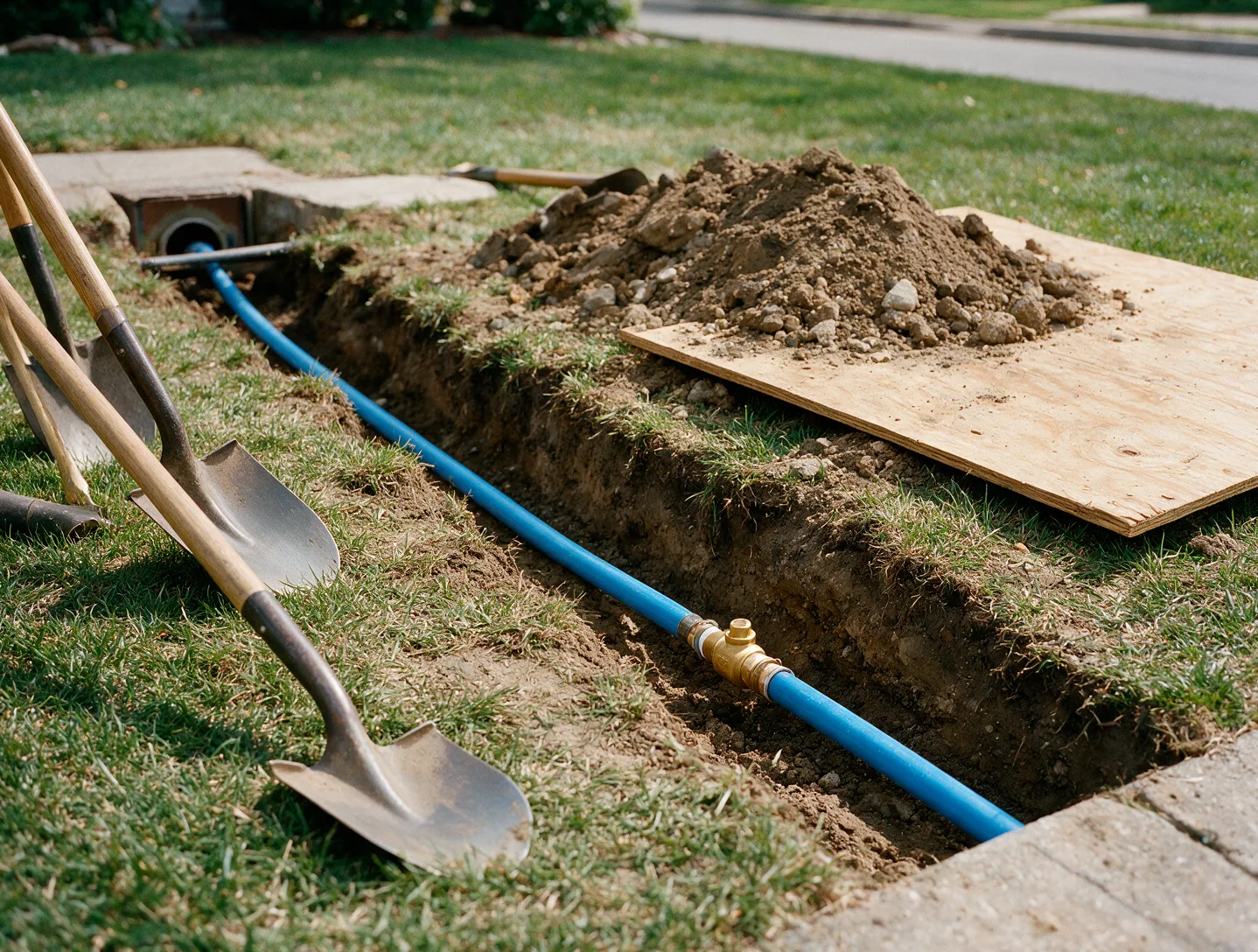
Our technicians trace water lines from the meter to the house foundation and measure static pressure at multiple points to find drops caused by corrosion, tree root intrusion or soil settlement. They expose the pipe at suspected failure points with minimal excavation and check for electrolysis on copper or pitting on galvanized steel before deciding on the repair method.
When pressure loss affects every fixture at once the main line is usually the source rather than a single faucet or toilet. Technicians verify this by isolating the house valve and watching whether flow returns at the meter only, then mark the route with paint so excavation stays precise and avoids other utilities. From the homepage Ric's Plumbing explains how trap seals prevent problems in water line repair throughout the USA.
Warning Signs of Water Line Issues
- Sudden drop in pressure at every faucet and shower head
- Wet patches appearing in the yard away from known drains
- Water meter spinning when all indoor fixtures are off
- Discolored water after pipes have been unused overnight
- Foundation cracks or settling near the water entry point
Common Causes of Water Line Failures
Tree roots seek moisture and wrap around joints or cracks in older lines, then expand and split the pipe wall. Shifting soil from freeze thaw cycles or heavy construction equipment can also separate bell and spigot connections on cast iron or pull apart glued PVC couplings.
Galvanized steel develops internal rust that narrows the bore until flow becomes a trickle. Copper lines suffer pinhole leaks where acidic soil or stray electrical current eats through the wall at fittings. Plastic lines fail mainly at glued joints that were not fully seated during the original install.
Technicians check the age of the pipe material against the house construction date to anticipate which sections are most likely to need attention first.
What Technicians Inspect and Measure
At the meter our crews record inlet and outlet pressure, then repeat the test at the house shutoff valve to isolate whether the loss occurs in the service line. They run a camera through accessible cleanouts to look for root balls, collapsed sections and standing water that indicates a sag.
Soil conductivity tests around copper pipe reveal stray current that accelerates corrosion. Technicians also examine the condition of the curb stop and the depth of cover over the line to decide if a new trench or a pull through method will work better.
Every fitting, valve and transition is photographed before any digging begins so the homeowner can see the exact location and extent of the damage.
Repair and Replacement Options
Small pinholes in accessible copper can be cut out and replaced with a new coupling and short stub. Longer runs with multiple failures are replaced end to end using the same diameter pipe to maintain flow rate. Where excavation is difficult a new line can be pulled through the old pipe after it is split and removed.
Technicians use compression fittings or pro press connections on copper to avoid open flame near the foundation. PVC or PE lines are joined with solvent cement rated for pressure or with mechanical stab fittings that grip the pipe wall without glue.
After the new section is tied in, pressure is held for thirty minutes while every joint is checked for seepage before backfill begins.
Materials and First Steps for Homeowners
Type L copper, schedule 40 PVC and high density polyethylene are the three materials kept on the truck for water line work. Each is chosen according to soil conditions, local code and the existing pipe material to prevent future electrolysis or joint failure.
Homeowners should locate and test the main shutoff valve so water can be stopped quickly if a leak suddenly worsens. They should also note which fixtures still have pressure and which have none, and avoid running any water until the line is isolated.
Clearing a path from the meter to the foundation helps the crew set up equipment without damaging landscaping.
Water Line Repair questions
How do you find the exact location of a break?
Technicians measure pressure loss between the meter and house valve, then send a camera through the line or use acoustic listening equipment to pinpoint the leak before any digging starts.
Can you repair a water line without digging up the whole yard?
When the break is isolated to one section we excavate only that area or use a trenchless pull through method that leaves most of the existing trench undisturbed.
What pipe material lasts longest underground?
Type L copper or high density polyethylene both resist corrosion better than galvanized steel once the surrounding soil chemistry is taken into account during selection.
Should I shut off the water myself before calling?
If you can reach the main valve safely turn it off to stop further flooding, then leave the area clear for the crew to work once they arrive.
Schedule Water Line Repair
Call Ric's Plumbing to have our technicians trace and restore your water supply line.